INTRODUCTION
Marée does not have a menu so much as a morning. What you eat at eight in the evening was decided some fourteen hours earlier, by a cook with cold hands and a notebook, somewhere between the first stall and the last.
It is an old way of running a kitchen, and not an efficient one. It means the menu is sometimes short and occasionally changes halfway through service. We would not do it any other way, and this is an attempt to explain why.
CHAPTER ONE
Before the city wakes
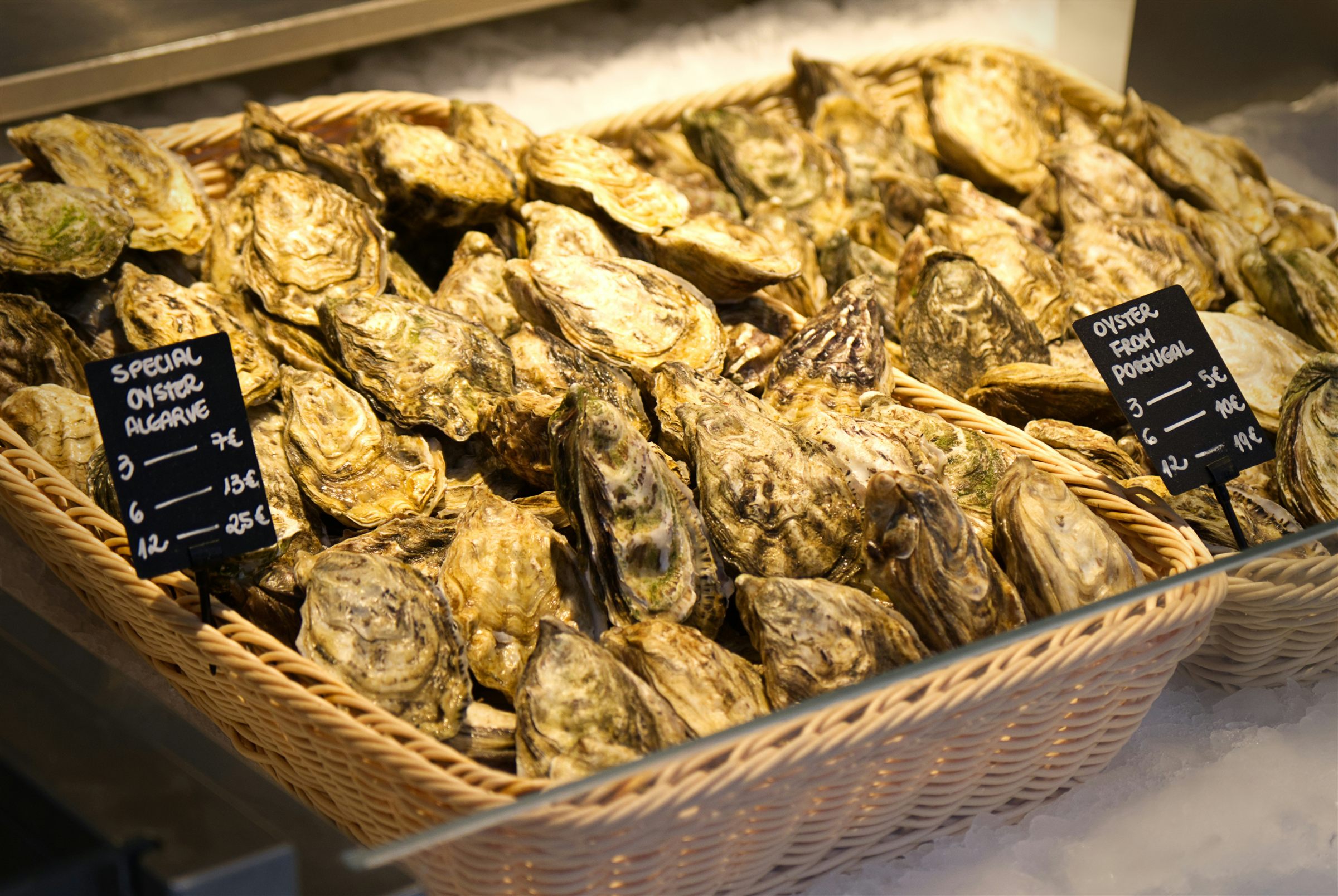
The kitchen’s day begins before the house’s. At half past five one of the cooks is already at the market, walking the length of the stalls with a list that is mostly blank. Oysters are the first stop. They are opened, tasted and argued over, and whatever wins that morning is what you will find on the menu, with cucumber and dill.
CHAPTER TWO
Buying what is there
There is no fixed menu at Marée, and this is why. A kitchen that orders by telephone gets what it asked for. A kitchen that goes to look gets what is good. Some mornings that means scallops, hand-dived and still closed. Some mornings it means nothing at all, and the menu leans on the garden instead.
CHAPTER THREE
Back at the pass
By eight the crates are in the kitchen and the lists have become a menu, written by hand and read aloud at the pass. The kitchen tastes everything before a guest does. If you would like to see it for yourself, the concierge can arrange for you to join the morning run. It is early, it is cold, and breakfast afterwards is the best in Amsterdam.
The Table
2 min read
A morning at the fish market
Marée’s menu is written at half past five, standing on a wet floor.
NEXT IN THE JOURNAL
The slow bath
A bath, done properly, takes an hour. This is how we would spend it.